A buyer-side reference
Sourcing cable accessories from India, specified properly
For the person who has to draft the specification, defend the award, and get the vendor file past audit.
- Not a manufacturer, not a stockist, not a marketplace, and not neutral.
- No datasheets, no size charts, no prices, no stock positions, ever.
- Every standard number here arrives with an instruction to verify the current edition.
What this reference is, and what it is not
You are here because a scope line says cable accessories and somebody expects a purchase order you can defend. That is the only job this site does. It does not sell, quote, hold stock, or pass your enquiry to an intermediary.
It is also not neutral, and a site that hid that would be the first thing to distrust. One named manufacturer sits behind this reference. The arrangement is stated below and set out in full on its own page.
What you get instead of marketing is procurement material. Which standards bind. Which certificate proves what. What to walk through on a factory floor. Which documents have to exist before goods leave an Indian port. Where a figure exists in a published source, it is given with the source and its date. Where it does not, the page says so in those words and tells you to get it in writing.
Four decisions, and the page that answers each
What the category actually contains
Six functional groups sit under one purchase-order line. Group them wrong in the enquiry and the quotes that come back cannot be compared to each other.
Which standards bind, and what proves it
Start here and read forward. The standards page runs into type test reports, then utility approvals, then the factory audit walk-list, in that order.
What to write into the enquiry and the order
Start here and read forward. The RFQ page runs into acceptance clauses, then export documentation and Incoterms, then the evidence a failure claim needs.
Whether India is the right answer at all
Sometimes it is not, and that page says when. Read it before you spend a month qualifying a supplier you were never going to award.
A test-house certificate is not a utility approval
An Indian vendor file will put seven kinds of name in front of you, and they do not carry equal weight. The Bureau of Indian Standards publishes the IS series. IEC and CENELEC publish the international documents your specification probably already cites.
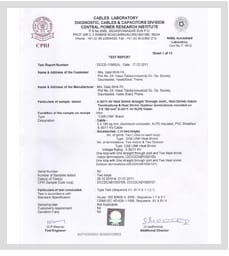
CPRI and ERDA are test houses. They test a sample of one stated construction and issue a report carrying a number and a date. That is all a type test report says.
MSEDCL, PGCIL and the state electricity boards are buyers, not laboratories. They issue an approval letter admitting a named supplier to a named voltage band. On the file behind this site, that band is 11 kV, and separately 11 kV to 33 kV.
UL is a third thing again. It lists a product against a file number, E328538 and E335936 in this instance, and the number exists so that you can look it up rather than take a logo on trust.
The distinction decides what you ask for. A test report proves a construction passed on a date. An approval letter proves a utility accepted a supplier for a band. Neither proves that the drum on your dock matches either document, which is why acceptance testing belongs in the purchase order rather than in the enquiry.
Where your specification needs a document number for accessories rather than for cable, IEC 60502-4 and CENELEC HD 629.1 are the two cited across the accessory range behind this site. Verify the current edition and amendment of both before you paste either into a tender document.
Copy this into the email: Please send the type test report number and its date, and the approval letter with its voltage band, for the exact construction you are quoting.
Who is behind this reference
This site is operated with one manufacturer behind it: Gala Thermo Shrink Pvt. Ltd., which makes heat-shrink and PVC cable accessories at Palghar in Maharashtra and Surat in Gujarat. Nothing here is a neutral survey of the market and you should not cite it as one. What that relationship covers, and the certificates and approvals that genuinely exist behind it, are on the manufacturer page. There is no product pitch anywhere on this domain.
What this site does not publish, and why
No datasheets. No size charts. No selection tables. No prices, lead times, minimum order quantities or stock positions. A dimension you cannot trace to a manufacturer's own controlled document is worth nothing in an audit, so product data stays with the manufacturer and is not restated here. Ask for the datasheet by part code, and ask for the revision date printed on it.
Other ways in
- The Indian cable accessory industry, and who you will meetMakers, traders and rebranders share a stand at the same exhibitions. How to tell them apart on the first call.
- The manufacturer this site sources fromThe disclosure in full, with the certificates and approvals that exist and the dates printed on them.
- Buyer questions about sourcing from IndiaInspection, payment, packing and paperwork, including the questions buyers only think to ask late.
- Contact and enquiriesWho to write to, and what to put in the message so the first reply is a useful one.
Turn the scope line into an answerable enquiry
One page is the terminal action on this site. It gives you the enquiry structure, the fields a supplier needs before anyone can quote, and the clause language that makes returned offers comparable.