Disclosure
The manufacturer this site sources from
Who pays for this reference, what its paperwork actually says, and what is deliberately not claimed for it.
Who pays for this reference
One manufacturer stands behind this reference and pays for it: Gala Thermo Shrink Pvt. Ltd., trading as Gala Shrink Fit, a member of the Gala Group. Read every page here knowing that.
This domain carries no product pages. That absence is the condition on which naming the supplier stays honest. Nothing here sizes a kit, ranks one, or tells you which one to buy.
What it carries instead is the standards to cite, the certificates to demand, the questions to put at the gate and the clauses to write into the order. Run a competing quotation through them. If a page cannot be used against the supplier who paid for it, that page is marketing — discard it, and name it in a correction.
The two names to escalate to
Two principals appear in the manufacturer's published material. J.P. Gala, Chairman, has been in cable accessories since 1979 and started out at Cable Corporation of India Ltd.; the profile gives him the group's human resources, finance, legal and administrative functions, and factories and labour-act regulation in particular. Bhavesh Gala, Managing Director, is a production engineer and carries research and development, marketing, production and export strategy.
Take one procurement point from that and no more. A wrong consignment needs a named person above the sales desk on day one, not on day thirty. Ask for that name and a direct line on the order acknowledgement, not in the quotation thread.
Published output, both units combined
Ask which works your part ships from
Those four figures are the manufacturer's own, published on its infrastructure page, with no third party named against any of them. Read them as scale, not as capacity standing free for your order.
Palghar in Maharashtra is the older works and the broader one: heat-shrink tube, moulded shapes, cable accessories and PVC moulding, with a phase II unit added in 2018. The Surat SEZ unit in Gujarat opened in 2011 and makes moulded shapes. Two works means the origin of your part is a question with an answer.
Put that question in the enquiry. Require the works named back on the order acknowledgement and again on the batch test certificate, so the two documents can be checked against each other on arrival.
What the in-house laboratories can and cannot settle
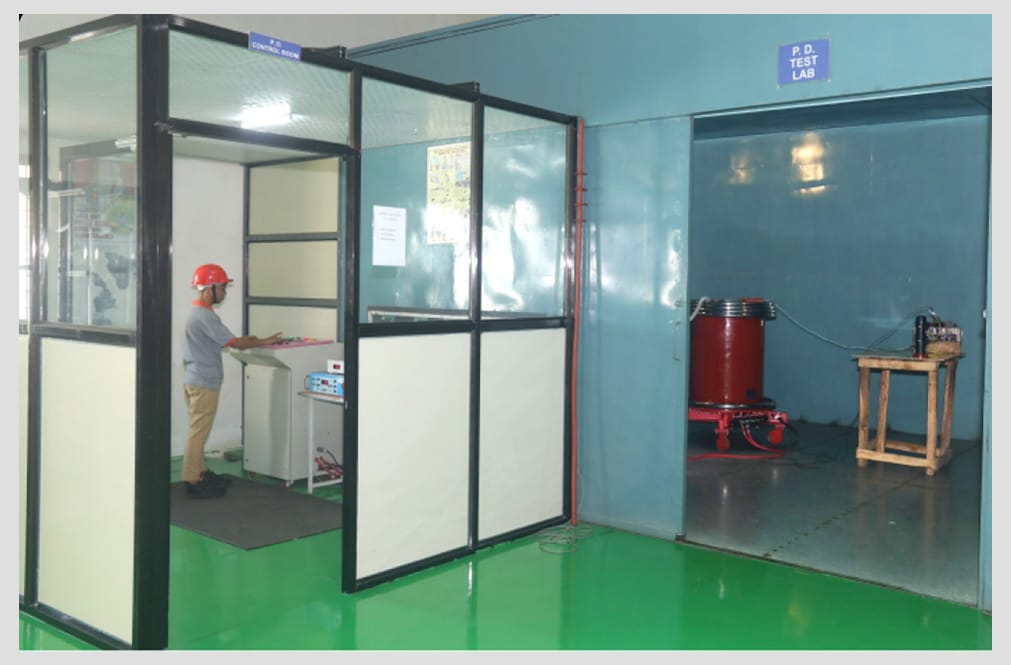
Three laboratories are published: partial discharge, high voltage, and general product testing. Compounding through to dispatch is stated as in-house. That is an advantage on traceability and a conflict on evidence.
An in-house laboratory settles routine and sample tests — the ones your purchase order should name and the works should run on your batch. It cannot settle a type test. The outside names on this record are CPRI, ERDA and UL, and nothing in the plant substitutes for them.
So split the demand in two. Ask for the type test report by number, from the outside laboratory. Ask for the routine test certificate by batch, from the works. The factory audit checklist sets out what to look at inside each laboratory and which records to pull while you are standing in it.
The dated record
| Date | What the published record states |
|---|---|
| February 1979 | Founded by J.P. Gala as a factory processing PVC material |
| 1988 | Dip-moulded and injection-moulded PVC components enter production |
| 1993 | Bhavesh Gala joins as Managing Director; first export order shipped, to Malaysia |
| 2001 | Heat-shrink moulded shapes begin |
| 2003 | ISO 9001 certified for the first time |
| 2007 | Commercial heat-shrink tube production, alongside ISO 14001 and OHSAS 18001 |
| 2009 | UL listing of the heat-shrink tubes, File E328538 |
| 2011 | UL listing of Busboot and Bustube, File E335936; the Surat SEZ unit opens |
| August 2012 | CPRI certificate issued for 33 kV joints and terminations |
| 2015 | MSEDCL approval up to 11 kV |
| 2016 | MSEDCL approval extended to the 11 to 33 kV band |
| December 2016 | Hundredth export country reached |
| 2018 | Palghar phase II unit |
| January 2020 | Corporate office moves to Eureka Tower, Malad, Mumbai |
Compiled from the manufacturer's own corporate history and certifications pages. These are its dates, not dates this site has checked against the underlying documents.
The certification register, and what each line is worth
| Document | Scope as published | Date in the listing text |
|---|---|---|
| ISO 9001:2015 · ISO 14001:2015 · ISO 45001:2018 | Management systems for quality, environment and occupational health and safety. Not a product claim | ISO 9001 first held 2003; no current issue date in the text |
| UL File E328538 | Heat-shrink tubes | Listed 2009 |
| UL File E335936 | Busboot busbar insulating shroud; the corporate history names Bustube under the same file | Listed 2011 |
| CPRI certificate | 33 kV heat-shrink joints and terminations | August 2012 |
| ERDA test report | The busbar sleeve | No date in the text and no report number; ask for the number first |
| MSEDCL approval | Up to 11 kV | 2015 |
| MSEDCL approval | 11 kV to 33 kV | 2016 |
| PGCIL · State Electricity Board · EDL | Approvals issued; no scope stated | No date in the text |
| Export House Certificate · AEO T1 | Customs and trade standing. No electrical meaning | No date in the text |
| Quality Brands · Certificate of Membership · an award to the Managing Director | Recognitions. Worth nothing in a vendor file | No date in the text |
The scans sit on the manufacturer's certifications page. The right-hand column reports what that page states in words. Where the words carry no date, do not infer one. Read it off the scan, then off the certificate itself, and read the expiry in the same breath.
The customers the manufacturer publishes
Reproduced from the manufacturer's own clientele and FAQ pages, with nothing added and nothing inferred. A name on a clientele page is not a reference. It records that somebody once bought something.
- Electrical OEMs — ABB, Nexans, Hyundai, Schneider Electric, Siemens, Israel Electric
- Energy and infrastructure — Suzlon, BHEL, L&T Construction
- Utilities and public sector — GETCO, NPCIL, UHBVN, Maharashtra State Electricity Distribution Co. Ltd., Power Grid Corporation of India
- Turn one of them into a reference — pick the name closest to your voltage class and your destination country, then ask for the buyer, the year, the kit type and the quantity on that job
- Keep the list out of your technical justification — the approving authority asks for the type test report and the approval letter. A customer list answers neither, and offering it reads as holding neither
What is not claimed here on the manufacturer's behalf
No price, no lead time, no minimum order quantity, no stock position — there is no source for any of the four and none will be estimated. No plant count and no plant area, because the manufacturer's own sources contradict each other on both. No entry on any PSU vendor list: utility approvals and vendor registration sets out why an approval letter is not a vendor code, and why the register is the only place to check one. And no voltage claim beyond what the approvals in the table above actually state. Every one of these is answerable in writing by the manufacturer directly. Ask there, and keep the reply.
Two places the manufacturer's own sources disagree
Close both in writing before you write a specification. First, voltage: the master catalogue's opening line offers termination and jointing to 66 kV, while the published selection charts, part codes and third-party reports stop at 36 kV and the CPRI certificate is written at 33 kV. A 66 kV busbar sleeve does exist and is published with its own data, but that is a busbar product and it settles nothing about a cable termination; why source from India works the voltage question through. Second, laboratories: a product brochure prints KEMA beside CPRI, and the certifications listing never mentions KEMA — reading a type test report properly works that one through. Neither gap disqualifies the supplier. Both need a report number in an email before award.
Three links leave this page
Three, and each goes to a document rather than to somebody writing about one: the company profile for the corporate statement, the certifications page in the table above for the scans, and the contact page in the box above for the enquiry. No page on this domain carries more than three, and half of them carry none.
No page here offers another site under the same publisher as independent corroboration, which is the trap a network of this shape usually falls into. Every figure above came from the manufacturer's published material or from the standard named in the same sentence, and where one could not be sourced the page prints that in those words. The editorial rules set out how to send a correction; the industry map is where the gaps nobody has closed are collected.
Check the paperwork before you check the price
The register above tells you what has been tested, by whom, and how old the evidence is. The rest of this site tells you what to demand, in what words, and at which stage of the purchase order.